
Table of Contents
Introduction
The data says that more than 190 million Americans play some format of game, and perhaps if we include the gambling numbers too, the data will change drastically. But not many of them pay attention to gaming language, whereas in that domain, things can get pretty complicated if a term is not well understood. But this doesn’t mean the article is for gamers only. Don’t forget that besides naming items and describing things, words also express and teach ideas, so enhancing the vocabulary is always an asset.
Ante vs. Anti
Anti means against something.
For example: anti-war means against war.
Ante is a poker word. It means a small amount of money or chips that players put in before the croupier deals the cards.
So the difference is simple:
- anti = against something
- ante = a starting bet in poker
If you mix them up, the sentence may sound right, but the meaning will be wrong.
The poker side of the pair is where the importance can be even more highlighted because we are dealing with a term, not just a casual word. You will find ante in poker terms for beginners, but you will also find it in literature or guides for experienced players, because in poker, this is the word that explains why a hand already has value before anyone chooses an aggressive line.
An ante helps create the starting pot, which means every hand begins with something worth contesting. That small contribution changes the feel of the table. It gives the round momentum from the first moment, and it helps explain why poker language talks so much about pressure, timing, and cost per orbit.
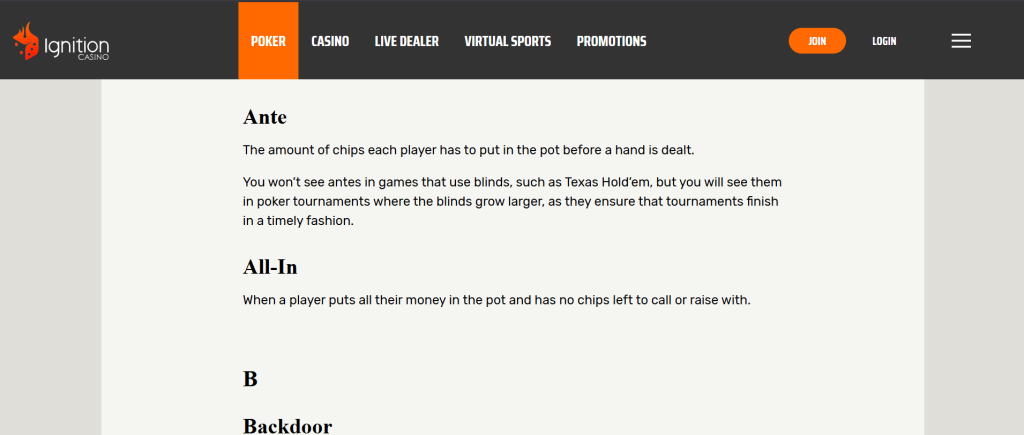
The term “ante” is widely used in poker and card games. It refers to a small mandatory contribution made before play begins. Because the word has a specific meaning in gaming, confusing it with “anti” can completely change the meaning of a sentence.
For example:
• Every player must pay the ante before the hand begins.
• The organization launched an anti-cheating initiative.
Although the words sound similar, they belong to very different contexts.
Stack vs. Stake
Stack and stake can be confusing because both are connected to money in poker, but they point in different directions.
A stack is how many chips or how much money a player has at the table. Take a look at this poker-related meme, and think of the word in the right context:
A stake is the money level of the game.
So a player can have:
- a small stack in a big-money game
- or a big stack in a smaller-money game

The simple difference is:
- stack = what the player has
- stake = how big the game is
Stack is one of poker’s most practical words. It shapes nearly every decision. A deep stack gives room to maneuver. A short stack tightens choices and raises the value of timing. When strategy writing says a player is down to 20 big blinds, it is talking about stack depth, not the stakes themselves. Using stake in that sentence blurs a very clear idea.
Queue vs. Cue
A different kind of gaming mistake shows up in online play: queue and cue. In gaming, the first one usually means joining a waiting line for matchmaking, or an event. Cue, however, means a signal. You queue for the match. A sound effect or visual marker can cue your next move.
This pair is very unique because modern gaming language is shaped in fast, public spaces where people write the way they speak. The British Council’s 2025 Phrase-ology report comments on the broader point in the following way: “Across generations, the way we use language is constantly shifting.”
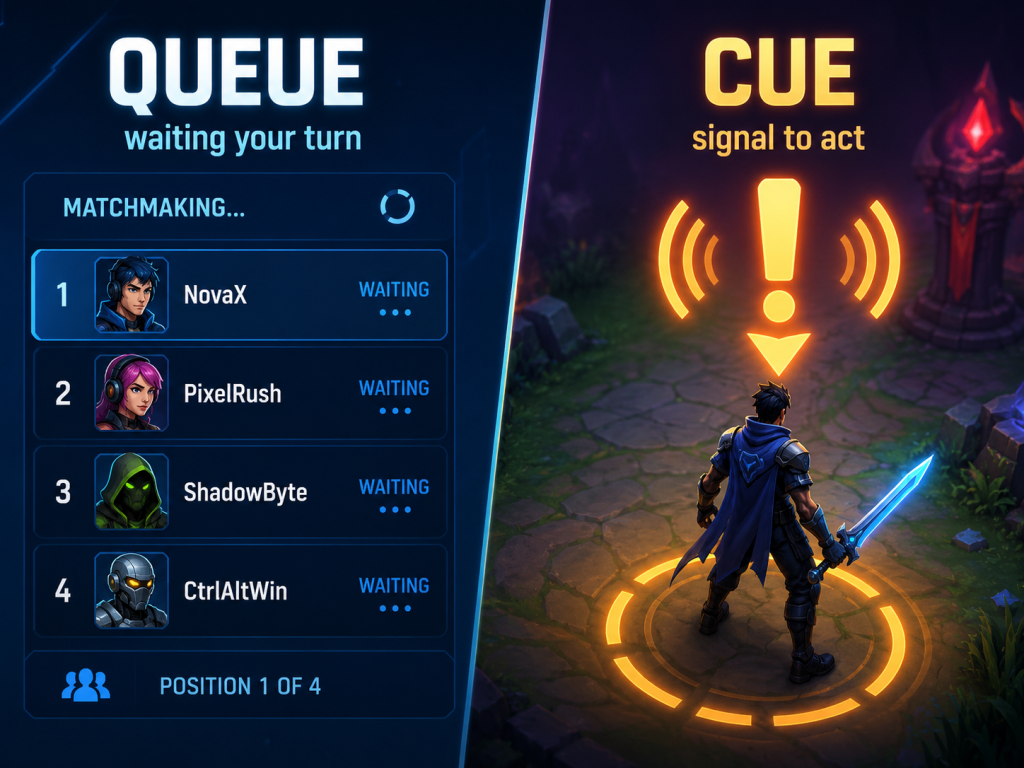
That observation fits gaming perfectly. The same report says it analysed five key datasets, including three generationally representative digital corpora, and one of those corpora drew from Twitch comments on League of Legends channels. In other words, online play is not just using language but is actively helping reshape it.
That is why the queue often gets simplified into cue. The shorter form looks cleaner and sounds right enough in a rush. Still, the original distinction is useful. Queue names your place in a process. Cue names the signal that tells you something is happening. In patch notes, support posts, or player guides, keeping those jobs separate makes instructions easier to follow. It also preserves one of the most interesting things about gaming English: common words do not disappear when they enter play, but they often become more exact.
Small spelling choices can carry big meaning in gaming, and I don’t say this because it sounds like a nice wordplay. It is the legacy of words in general, but when they enter specific industries and business vocabulary as terms, their role becomes even heavier.