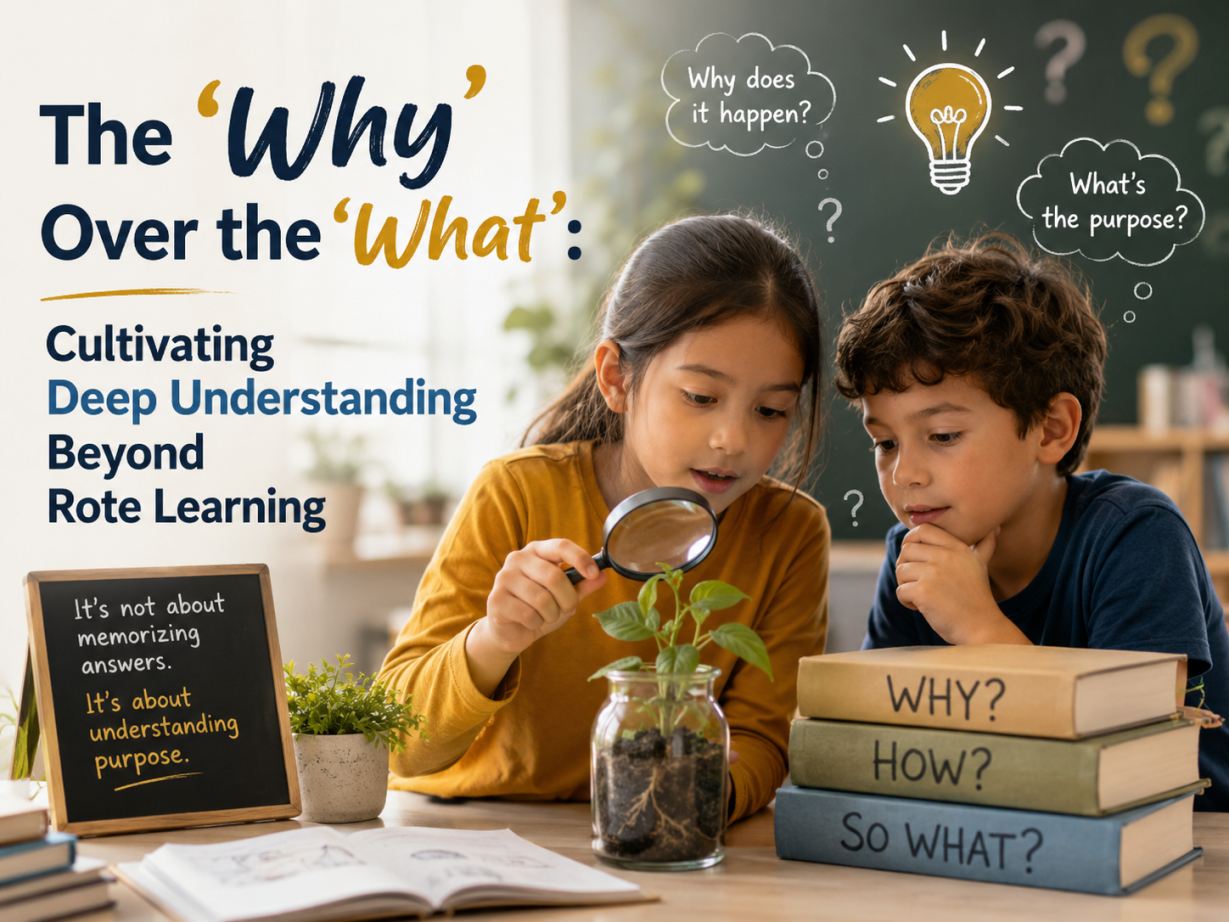
The ‘Why’ Over the ‘What’: Cultivating Deep Understanding Beyond Rote Learning
Children are natural questioners. From the moment they learn to speak, they want to know how things work and why the world is the way it is. Yet somewhere along the path of schooling, that instinct to question often gets replaced by the push to simply memorize and repeat.
As a parent, you can steer your child back toward curiosity. Instead of drilling facts, help them explore meaning. The goal isn’t just to prepare them to finish assignments quickly for a grade, even with support from a DoMyEssay writing service, but to nurture thinking that lasts. Understanding comes when they learn to ask good questions and connect ideas across experiences.
Table of Contents
Rote Memorization Is Not Enough
Memorization has its place. Kids need to know letters, numbers, and basic rules. But if that’s all they’re learning, they miss out on understanding how knowledge works together.
When a child only learns “what,” the information becomes isolated. They may recall facts for a quiz but forget them by next week. In contrast, asking “why” activates reasoning. It gives facts a purpose and invites the child to explore how things relate.
This matters more than you might think. According to one study, children who were encouraged to explain answers rather than just give them performed better on transfer tasks, meaning they could apply what they learned in new situations. Encouraging deeper thinking early lays the groundwork for adaptability and problem-solving later in life.
Curiosity Boosts Brain Engagement
When kids are curious, their brains work harder and retain more. Neuroscience shows that curiosity lights up the brain’s reward center and boosts activity in memory-related regions.
Tutor Angela, a contributor at the essay writing service DoMyEssay, noted that students who are taught to ask questions tend to become more self-motivated and independent learners. She points out that building this habit early, long before kids reach high school or college, makes learning feel like a choice, not a chore.
Curiosity doesn’t require expensive tools or elaborate lessons. It starts with a simple shift: let your child lead. If they ask why the leaves change color or how bridges stay up, don’t rush to give the answer. Instead, ask them what they think and explore the idea together.
Use Play to Explore “Why”
Children learn best through play. When you combine play with curiosity, you create space for meaningful learning. Open-ended activities invite your child to think creatively and test ideas.
For example:
- Build with blocks and ask why a tall tower tips over;
- Mix baking soda and vinegar, then explore why it fizzes;
- Sort leaves by shape, then ask why trees have different types.
In each case, you’re not just playing. You’re encouraging your child to make predictions, notice patterns, and reflect on outcomes. This helps turn everyday experiences into learning that sticks.
Connect New Ideas to Real Life
Abstract ideas are harder for young kids to grasp. But when you tie concepts to what they already know, understanding deepens. This is called scaffolding, which means supporting new knowledge by anchoring it to familiar experiences.
If you’re teaching numbers, count apples during snack time. When discussing weather, talk about how rain fills puddles and helps flowers grow. The goal is to make learning relevant so your child sees that knowledge isn’t just for school. It explains the world around them.
This technique also builds confidence. When children understand that they can make sense of things they see and hear, they begin to trust their ability to learn.
Model the Thinking Process
Children imitate what they see. If you ask thoughtful questions out loud, they’ll learn to do the same. Narrate your curiosity. Say things like:

- “I wonder why this bread is rising so fast.”
- “That’s interesting. What do you think would happen if we used cold water instead?”
- “Let’s figure this out together.”
This shows that it’s okay not to know everything and that asking is a key part of learning. When you model this, your child sees inquiry as normal, not intimidating.
Encourage Explanation, Not Just Answers
When your child gives an answer, follow up. Ask how they got there. What made them think that? Can they show or explain it?
This process, called elaborative rehearsal, strengthens understanding. The act of explaining helps organize knowledge and reveal gaps. It also teaches your child to think flexibly instead of memorizing fixed responses.
Avoid rushing to correct wrong answers. Use mistakes as starting points for deeper thinking. This builds resilience and helps your child see learning as a journey, not a test.
Make “Why” the Default
The earlier you build these habits, the more natural they become. Curiosity, critical thinking, and deep understanding don’t appear overnight, but they grow steadily with daily practice.
By choosing to emphasize “why” over “what,” you help your child see learning as something exciting and open-ended. This doesn’t just help them do well in school. It prepares them to engage with the world thoughtfully and confidently for the rest of their lives.