

A nursing student reads pharmacology notes twice but forgets important facts by Thursday. The material seemed familiar, yet recalling drug classes during quizzes feels much harder. Many students face this problem because rereading alone rarely builds lasting memory.
Learning how to retain info requires more than simply reviewing notes repeatedly. Active recall, spaced repetition, and meaningful connections help students remember important concepts longer.This guide explains practical study methods that help you remember information longer.
Table of Contents
Why We Forget What We Study
Newly learned information can fade rapidly, especially without opportunities to retrieve or review it. The rate of forgetting depends on how well the material was learned. Hermann Ebbinghaus studied this pattern, known as the forgetting curve, during the 1880s. A 2015 PLOS ONE study later found similar results about memory decline. Below are the 3 common reasons students struggle to remember what they study:
- Passive Review: Rereading notes creates familiarity without always helping students recall information later. A 2013 research review rated rereading and highlighting as less effective techniques.
- Divided Attention: Switching between studying and other activities makes learning new information more difficult. A 2013 study found laptop multitaskers scored 11% lower on a quiz.
- Interference: Learning similar concepts together can make recalling individual facts more difficult later. For example, drug names with similar spellings may become confusing without review.
Understanding these problems is important when learning how to study and retain information. Better study methods strengthen memory through focused learning, regular practice, and recall.
How to Study and Retain Information With 8 Proven Methods
The best way to retain information when studying involves combining different learning techniques. These methods target different learning processes, including recalling facts, distinguishing concepts, and strengthening long-term memory. Here are 8 practical methods you can use to improve your memory.
1. Practice Active Recall
Active recall strengthens memory by making students remember facts without checking their notes. A 2006 study by Roediger and Karpicke found that testing improved long-term memory retention. Students can practice this method using flashcards, written questions, or short daily quizzes.
2. Space Out Review Sessions
Spaced repetition involves reviewing lessons across several days instead of studying everything together. Research shows that spreading study sessions over time helps students remember information longer. For example, students preparing for Thursday’s quiz can review Sunday’s lessons on Monday and revisit them on Wednesday.
3. Mix Related Topics
Mixing related topics, called interleaving, involves practicing different concepts within the same study session. A 2013 research review rated interleaved practice moderately useful for learning. For example, nursing students can alternate questions about beta blockers, calcium channel blockers, and ACE inhibitors to practice distinguishing their effects.
4. Ask Why and How
Asking why something happens helps students connect new facts with their existing knowledge. A 2013 research review rated this questioning method moderately useful for learning material. For example, students can ask why beta blockers slow heart rates during revision.
5. Teach It to Someone Else
Preparing to teach encourages students to organize important concepts before explaining them. A 2014 Washington University study found that students expecting to teach recalled more than those preparing for a test. Participants did not actually teach anyone. Students can apply this approach by preparing simple explanations and testing their recall afterward.
6. Pair Words With Visuals
Combining written explanations with relevant visuals helps students understand relationships between concepts. Richard Mayer’s multimedia learning research supports using words alongside meaningful images. For example, nursing students can pair descriptions of blood circulation with labeled heart diagrams to understand how blood flows through different chambers.
7. Group Facts Into Chunks
Breaking large amounts of information into smaller groups makes studying more manageable overall. Psychologist Nelson Cowan’s 2001 review suggested working memory holds around four chunks simultaneously. For example, grouping drug names by common endings helps students recognize similar medications.
8. Sleep Between Study and the Exam
Getting enough sleep is important when learning how to retain information better. Harvard researchers found sleeping after learning improved recall compared with remaining awake afterward. This advantage became stronger when participants learned competing information before taking their tests.
Using PDFelement AI Space for Active Recall
Active recall works better when students have useful questions ready for regular practice. However, preparing flashcards from lengthy chapters can take considerable time and effort. Wondershare PDFelement AI Space lets students upload course materials and generate flashcards and quizzes for self-testing. It supports PDFs, Word documents, slides, images, text, and even YouTube video subtitles.
Flashcards From Course Files
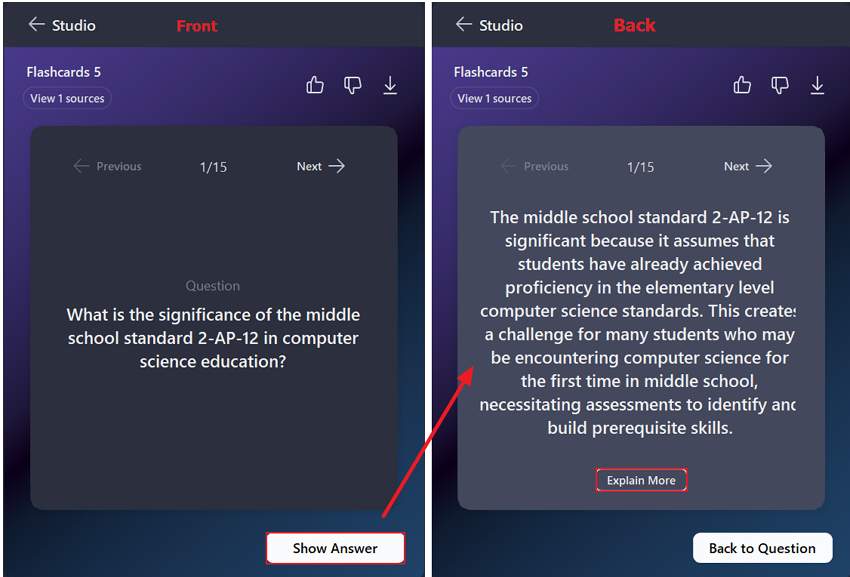
PDFelement’s AI-powered flashcards help students turn important course concepts into useful question-and-answer cards. The Flashcard settings under Studio let users choose card counts and difficulty levels. Students can choose fewer, easier cards for introductory topics or more challenging questions when preparing for exams.
Each flashcard displays a question first, allowing students to test their memory independently. Clicking “Show Answer” reveals the response after students have considered their own answers. The “Explain More” option provides additional context when students need further clarification afterward.
Quizzes for Self-Testing
Practice quizzes help students test their knowledge before taking an actual exam later. A 2013 research review identified practice testing as a highly effective learning method. AI Space allows students to select question counts and adjust difficulty levels easily. Students can check answers immediately, identify mistakes, and revisit difficult topics before exams. This makes self-testing easier while helping students focus on areas needing further improvement.

Mind Maps and Podcasts for Review
AI Space also offers mind maps and podcasts to support different study methods. Both features use previously uploaded files, saving students from uploading their materials again.
- Mind Maps: Students can organize important concepts into visual diagrams with connected subtopics. These maps help students understand relationships between ideas and review complex information easily. Finished mind maps can also be downloaded as PNG images for later revision.
- Podcasts: AI Space converts study materials into audio episodes for convenient listening sessions. Students can choose detailed Deep Dive episodes or shorter Brief versions for review. Downloadable MP3 files make revisiting lessons easier during commutes or between study sessions.
Conclusion
Learning how to retain info requires effective study methods rather than endless rereading. Active recall, spaced repetition, mixed practice, and proper sleep support stronger long-term memory. For Thursday’s quiz, two short review sessions can help students remember more effectively.
PDFelement AI Space makes studying easier by creating flashcards, quizzes, mind maps, and podcasts. Students can use these resources to practice recalling information from their course materials. Start with short daily reviews and focus on remembering rather than simply rereading notes.