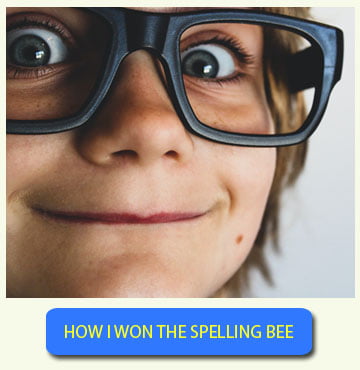
CLICK HERE TO WIN THE SPELLING BEE !!!!

🎓 Cognitive Biases Lesson: Understand Common Thinking Errors

Learn how cognitive biases affect judgment, decision-making, and critical thinking.

Cognitive Biases Lesson: Understand Common Thinking Errors
Learn how cognitive biases influence judgment, memory, and decision-making, and discover strategies for recognizing and reducing common thinking errors in everyday life.

/10

Cognitive Biases

Understand Common Thinking Errors and Think More Clearly

Learn how cognitive biases influence judgment, memory, and decision-making, and discover strategies for recognizing and reducing common thinking errors in everyday life. This comprehensive lesson explores the systematic patterns of deviation from rationality that affect everyone—from confirmation bias and the availability heuristic to overconfidence and the sunk cost fallacy. You'll learn to recognize these biases in yourself and others, understand how they affect everything from personal decisions to global events, and develop practical strategies to counteract them. With fascinating examples including Nobel Prize-winning research from Kahneman and Tversky, the Dunning-Kruger effect, and real-world cases of bias in action, this lesson makes psychological science both engaging and practical. Perfect for students in grades 9–12, this lesson builds essential skills for critical thinking, informed decision-making, and intellectual humility in a complex world.

Cognitive Biases: How Our Minds Deceive Us

Cognitive biases are systematic patterns of deviation from rationality in judgment and decision-making. They are mental shortcuts (heuristics) that our brains use to process information quickly, but they often lead to errors. These biases affect everyone—from experts to novices—and can influence memory, judgment, and decision-making in ways we don't realize. The study of cognitive biases was pioneered by psychologists Daniel Kahneman and Amos Tversky in the 1970s, revolutionizing our understanding of human judgment. Did you know that Kahneman won the Nobel Prize in Economics in 2002 for this work? He showed that even experts make systematic errors in reasoning, and these errors follow predictable patterns. For example, the "availability heuristic" causes us to overestimate the likelihood of events we can easily recall—like plane crashes or shark attacks—while underestimating more common but less memorable risks like heart disease. Understanding cognitive biases is the first step to reducing their influence on our thinking and decision-making.

Confirmation Bias: Seeing What We Want to See

Confirmation bias is the tendency to seek, interpret, and remember information that confirms our existing beliefs while ignoring or dismissing contradictory evidence. This is one of the most powerful and pervasive cognitive biases, affecting everything from scientific research to political opinions to personal relationships. For example, if you believe that a certain politician is corrupt, you will notice and remember every piece of news that supports this view while dismissing or forgetting information that contradicts it. Did you know that the term "confirmation bias" was coined by psychologist Peter Wason in 1960, who demonstrated it through a series of experiments where people consistently sought confirming rather than disconfirming evidence? In 2016, a study found that confirmation bias was a major driver of political polarization, with people on both sides of the political spectrum selectively consuming media that confirmed their views. Critical thinkers actively combat confirmation bias by deliberately seeking out opposing viewpoints, considering alternative explanations, and being willing to change their minds when evidence warrants it.

Availability Heuristic: The Drama Bias

The availability heuristic is a mental shortcut that leads us to overestimate the likelihood of events that are vivid, recent, or easy to recall, while underestimating more common but less dramatic events. This bias explains why people are often more afraid of flying than driving, even though driving is much more dangerous—plane crashes are dramatic and widely covered, while car accidents are so common they rarely make the news. Did you know that the availability heuristic was identified by Kahneman and Tversky in their 1973 paper "On the Psychology of Prediction"? They found that people's estimates of probability were heavily influenced by how easily examples came to mind. In 2018, researchers found that media coverage of rare events like shark attacks and child abductions significantly increased public fear, even though these events were extremely rare. Critical thinkers recognize that "vivid" does not mean "likely"—they check the actual statistics rather than relying on what is most memorable or emotionally powerful.

Anchoring Bias: The First Number Effect

Anchoring bias occurs when we rely too heavily on the first piece of information we receive (the "anchor") when making decisions, even when that information is irrelevant or arbitrary. For example, if you're asked whether Gandhi lived to be more or less than 144 years old, your estimate will be higher than if you're asked whether he lived to be more or less than 50—the first number influences your answer. Did you know that anchoring bias was first demonstrated by Kahneman and Tversky in 1974 using a simple "wheel of fortune" experiment? Participants who saw a high number on the wheel gave higher estimates for unrelated questions. In 2017, a study found that anchoring bias significantly affects real-world decisions like salary negotiations, house prices, and legal judgments. Critical thinkers recognize that first impressions, initial estimates, and starting points can unduly influence their decisions—they deliberately adjust away from anchors and consider a wider range of possibilities.

Overconfidence Bias: The Illusion of Certainty

Overconfidence bias is the tendency to overestimate our own abilities, knowledge, and judgment. Most people believe they are above average in intelligence, driving ability, and honesty—a statistical impossibility that reflects this bias. Overconfidence can lead to poor decisions, unnecessary risks, and failure to learn from mistakes. Did you know that the psychologist David Dunning and his graduate student Justin Kruger demonstrated in 1999 that people who are least competent are often most overconfident (the Dunning-Kruger effect)? They found that people with low ability in areas like logic, grammar, and humor wildly overestimated their performance because they didn't have the skills to recognize their limitations. In 2015, a study of financial traders found that overconfident traders made significantly worse decisions and earned lower returns. Critical thinkers combat overconfidence by actively seeking feedback, testing their assumptions, considering counterarguments, and maintaining intellectual humility—recognizing that they could be wrong.

Sunk Cost Fallacy: Throwing Good Money After Bad

The sunk cost fallacy is the tendency to continue investing in a failing project or decision because of what has already been invested (time, money, effort), even when it would be better to cut losses. This bias is particularly dangerous in business, relationships, and personal projects where we may continue to invest in situations that are clearly not working. For example, continuing to attend a bad movie because you paid for the ticket is a classic sunk cost fallacy. Did you know that the term "sunk cost" comes from economics, where it refers to costs that cannot be recovered? The economist Richard Thaler, who won the Nobel Prize in 2017, studied how this fallacy affects real-world decisions. In 2019, researchers found that the sunk cost fallacy was a major factor in why governments continue to fund failing projects and why people stay in unsatisfactory relationships. Critical thinkers ask: "What is the best course of action going forward, regardless of what I've already invested? Is continuing worth it?"

Framing Effect: How Presentation Changes Perception

The framing effect occurs when the way information is presented (the "frame") influences how we perceive it and the decisions we make, even when the underlying facts are the same. For example, people are more likely to choose a medical treatment when told it has a 90% survival rate than when told it has a 10% mortality rate—even though the information is identical. Did you know that Kahneman and Tversky demonstrated the framing effect in a famous study where they presented the same decision in different ways and found that people's choices changed dramatically? In 2015, researchers found that framing effects significantly influence political opinion, with voters responding differently to the same policy depending on how it's described. Critical thinkers overcome framing effects by: reframing decisions in different ways, focusing on the actual facts rather than the presentation, and being aware that how a question is asked can influence the answer.

Hindsight Bias: The "I Knew It All Along" Effect

Hindsight bias is the tendency to see events as having been predictable after they have occurred—"I knew it all along." This bias leads us to overestimate our ability to predict the future, making it harder to learn from experience because we believe we already knew what was going to happen. For example, after an election, people often claim they always knew the winner was going to win, even if they had been unsure or had predicted otherwise. Did you know that the psychologist Baruch Fischhoff introduced the term "hindsight bias" in 1975, demonstrating how people consistently overestimated what they "knew" before events occurred? In 2018, researchers found that hindsight bias leads to overconfidence in decision-making and makes it harder to learn from past mistakes. Critical thinkers combat hindsight bias by: keeping records of their predictions and reasoning, acknowledging uncertainty at the time decisions were made, and judging decisions based on the information available at the time, not by the outcome.

Social Biases: How Others Influence Our Thinking

Social biases affect how we perceive and interact with others, often leading to unfair judgments. These include: ingroup bias (favoring those in our own group), outgroup homogeneity (seeing outgroup members as all alike), and fundamental attribution error (attributing others' behavior to their character rather than circumstances). For example, if someone cuts you off in traffic, you might think "They're a rude person" (dispositional attribution) rather than "They might be rushing to the hospital" (situational attribution). Did you know that the fundamental attribution error was first described by psychologist Lee Ross in 1977? He found that people consistently overestimate the role of personality and underestimate the role of situation in others' behavior. In 2020, researchers found that social biases contribute to systemic discrimination in hiring, education, and criminal justice. Critical thinkers actively counter social biases by: considering situational factors in others' behavior, being aware of their own group biases, and making conscious efforts to treat others fairly.

Mastering Cognitive Biases: Thinking Against the Grain

Mastering cognitive biases involves recognizing that we are all subject to systematic thinking errors and developing strategies to counteract them. This requires self-awareness, deliberate practice, and the willingness to question your own thinking. Key strategies include: slowing down decisions (system 2 thinking rather than system 1), seeking contradictory evidence, considering alternative explanations, keeping a decision journal, and asking for feedback from trusted others. Did you know that the psychologist Daniel Kahneman, in his book "Thinking, Fast and Slow" (2011), described two systems of thinking—System 1 (fast, intuitive, biased) and System 2 (slow, deliberate, more accurate)? He argued that the key to better thinking is recognizing when to engage System 2 to override System 1 biases. In 2020, research showed that people who practice "debiasing techniques" over six months show significant improvement in decision-making. Mastering cognitive biases is not about eliminating them—which is impossible—but about recognizing and countering them when they matter most. As Kahneman said, "The first rule of thinking is that you are always learning something, and the second rule is that you are not aware of what you are learning." By developing awareness of your biases, you can become a more rational, fair, and effective thinker.

🏆 Enter your data to receive
your score card and your certificate.

 *The name you will set will be used in your certificate of achievement.

Your score is

0%

Undefined Subject

📚 Further Learning

Further Learning Resources

🚀
Great free Education— weekly
Lessons - Games - Activities