Flashcards look simple, yet they can feel stubborn when a test is close. You flip, read, flip again, and somehow the facts still slide away.
Reading a card ten times feels productive, but it mostly builds familiarity. Your brain recognizes the words, then panics when you need to pull the idea out on command. What you want is retrieval. You want to force the answer up from memory, even if it comes up messy at first. That struggle is useful. It strengthens recall more than calm rereading does.
The same idea applies to writing-heavy classes: students often need more than rereading notes, especially when an essay, research task, or deadline is involved. In those moments, EssayService.com can be a helpful source of human writing support, essay guidance, and help with organizing ideas clearly.
So the best way to memorize flashcards is to practice remembering, then space those attempts out, then mix them so your brain has to choose the right idea fast. Tonight, you’ll use short rounds, quick resets, and a few deliberate “hard moments” to make the memory stick.
Table of Contents
How to Memorize Flashcards: What Actually Works
Flashcards work when they trigger retrieval practice, not passive review. When you test yourself, you are training the exact skill you need on an exam: pulling information out without a prompt. Research on the testing effect shows that memory tests can improve later retention compared to additional studying, especially when the final test happens after a delay.
Spacing matters, too. When practice is distributed across time, recall tends to last longer than when it is packed into one block. A large meta-analysis of distributed practice found consistent benefits for spaced learning over massed learning across many experiments.
Finally, difficulty is your friend when it is controlled. A recall attempt that feels slightly hard pushes your brain to rebuild the memory, which makes it more durable next time.
Technique 1: Blurting (Brain Dump)
Blurting is simple: you stop looking, then you dump everything you can recall onto paper or a notes app. Start with a tiny set, like 10 to 15 cards. Flip through them once, then close the stack. Now write the answers you remember in rough form. No peeking. The goal is to catch what your brain can produce under pressure.
After you dump, check your cards and mark what you missed. Then do a second dump, but only for the missed items. This creates a fast feedback loop that forces recall again before you forget.
If you want to memorize flashcards quickly, blurting is a good first move because it exposes weak spots in minutes, not hours of “studying.”
Technique 2: Active Recall + Timing
Active recall is the engine. Timing is the steering wheel. Set a short timer so you stay honest and avoid drifting into rereading. Do a quick round where you answer out loud, then score yourself with brutal honesty: correct, partial, blank.
Keep the pace tight. The point is many recall attempts, not a slow performance. After each round, take a small pause, then do another round. That tiny gap helps your brain re-access the memory instead of coasting on the same mental snapshot.
Use this rhythm:
- 6 minutes: test yourself on a small deck, answering out loud
- 2 minutes: review only missed cards, then reshuffle
- 6 minutes: retest the same deck in a new order
- 3 minutes: walk, stretch, water, then repeat with the next deck
Add one more rule to make the timer work harder for you: switch the prompt style on the second 6-minute round. If your card is a definition, force yourself to give a real-life example. If it’s a formula, say what each symbol means before you compute anything. If it’s a concept, name one common mistake students make with it. This tiny twist stops your brain from memorizing the card’s wording and pushes you to recall the idea in a new shape, which usually holds up better on an exam.
Technique 3: Spaced Repetition (Micro-Spaced)
Classic spaced repetition is day-by-day scheduling, but you can still use the logic overnight. Think “micro-spaced.” Instead of grinding the same card repeatedly, you create small gaps, even if the gaps are only minutes. Those gaps matter because spaced practice tends to outperform massed practice for long-term retention.
Here is a clean approach for tonight: split your flashcards into three piles. Pile A is hard, Pile B is medium, Pile C is easy. Cycle them in waves. You see A, then B, then C, then back to A. That rotation creates spacing automatically.
The key detail: every time a card moves from hard to medium, you increase the gap before you see it again. Even a 10- to 20-minute delay can make the next recall attempt feel effortful, which is exactly what strengthens memory.
Technique 4: Interleaving (Mix Topics on Purpose)
Interleaving means you mix problem types or topics instead of studying one category in a block. It feels slower because your brain cannot stay on autopilot. That is the point. In real tests, questions arrive mixed, and you must choose the right idea, not just repeat the last one.
Research in math learning has found that interleaved practice can outperform blocked practice on later tests, because it trains strategy selection and discrimination.
So, how do you memorize flashcards? You stop grouping them by comfort. Mix chapters. Mix definitions with examples. Mix formulas with “when would you use this?” prompts. Then, when you miss a card, keep it in the mix instead of isolating it forever. Your brain learns the boundary lines between similar ideas, and those boundary lines are where most exam mistakes happen.
Technique 5: Teach-Back
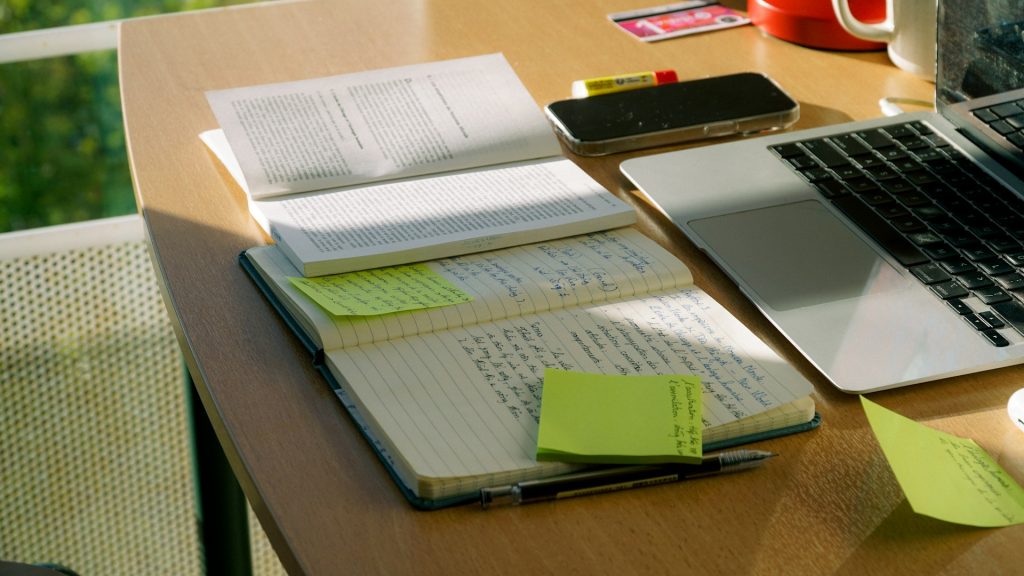
Teach-back means you stop treating the card as a prompt and start treating it as a lesson plan. Look at the front, then flip it, read the answer once, and close the card. Now explain the concept out loud like you’re talking to a friend who missed class. Use simple words, then add one detail that proves you understand it. If you get stuck, pause and try again before you peek. That pause forces retrieval.
When you teach, you naturally organize the idea into steps, cause and effect, or a quick example. That structure makes the memory easier to find later. Testing research supports the idea that pulling information from memory strengthens later retention compared to extra review.
Keep it tight: one card, one explanation, one example, then move on. Your goal is fluent recall, not a perfect lecture.
Technique 6: Dual Coding (Words + Tiny Sketch)
Dual coding is pairing a short verbal cue with a simple visual cue so your brain has two routes to the same memory. You’re not making art. You’re making a tiny symbol that captures the idea fast. A stick figure, an arrow, a quick shape, a weird icon. Anything you can redraw in three seconds.
Do this right after you answer a card, so the image becomes part of the retrieval attempt. If the card is “glycolysis outputs,” your sketch might be a glucose hexagon turning into two little “pyruvate” shapes with a couple of ATP coins. If the card is a history concept, you might draw a crown, a crowd, and a broken chain.
The visual becomes a shortcut. When you blank, the sketch can jog the pathway back to the words. It also keeps you actively engaged, which helps your attention stay sharp.
Technique 7: Memory Hooks (Story or Weird Image)
Memory hooks work because the brain grabs onto vivid, emotional, and strange details more easily than bland ones. You take a dry fact and glue it to a mini scene that feels loud in your head. The hook does not need to be logical. It just needs to be sticky.
Start by choosing one anchor element from the card, then exaggerate it into something you can “see.” Make it embarrassing, gross, dramatic, or hilarious. Then replay it quickly each time the card appears. Over a few rounds, the hook becomes the bridge back to the real answer.
Use these hook styles:
- Turn the keyword into a character with a job and a prop
- Shrink the concept into a tiny object you can hold in your hand
- Make the process a short action scene with one absurd twist
- Place the idea in a familiar location, like your kitchen or bus stop
To keep hooks from turning into pure nonsense, add a quick “return link” after the image: say the real answer in one clean sentence right away. The weird scene is the doorbell, but the sentence is the address, so your brain learns where the memory is supposed to land.
Final Round: Make It Stick Before Sleep
Finish with one clean pass that feels like a test. Shuffle the whole deck, answer out loud, and mark anything that still hesitates. Take those shaky cards and do two fast cycles with short gaps between them. Then stop. Sleep matters because memories consolidate after learning, and a rested brain retrieves better the next day.
In the morning, do a five-minute check. Hit the hard cards first, then walk away while you still feel sharp. If you have time later, repeat a short spaced round instead of rereading. Your goal is reliable recall under pressure, with fewer cards getting stuck on the tip of your tongue.